
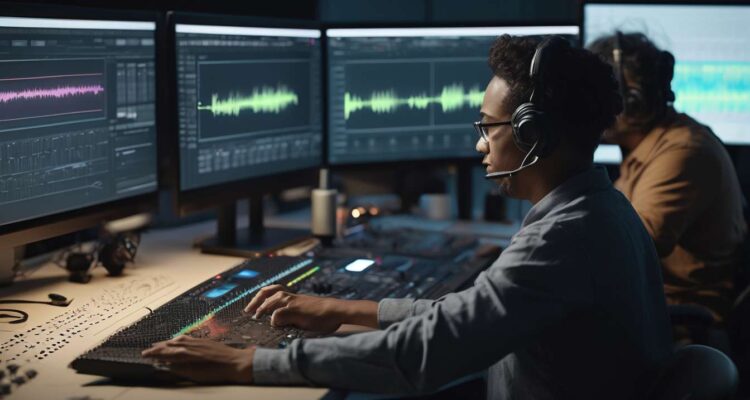
From mainstream media to adult video production, accessibility advancements intersect with broader inclusion movements in surprising ways.
We remember the first time accessibility specialists joined a set — their presence reframed lighting, sound, and consent not as afterthoughts but as core creative elements.
Captioners and audio describers translate intimacy into language without stripping nuance, and technicians adapt interfaces so performers and viewers with disabilities can engage safely and fully.
We’ve navigated industry stigma, regulation gaps, and technical hurdles, learning that accessibility improvements often spark innovations that benefit everyone:
- Clearer communication
- Improved on-set safety protocols
- More thoughtful storytelling
In this article, we pull back the curtain on the collaborations, compromises, and creative problem-solving that have made adult video media more accessible.
We examine:
- What’s worked
- What still needs change
- How behind-the-scenes accessibility efforts reshape the industry
On-Set Accessibility Roles
Assign clear accessibility roles on set — such as captioning coordinator, ASL interpreter, and mobility assistant — so performers and crew with disabilities can work safely and effectively.
Build a small, reliable team that understands on-set accessibility is part of our shared craft. Each person has defined tasks and accountability.
Define role responsibilities:
- Captioning coordinator: enforces captioning standards and manages live-caption workflows.
- Audio description lead: scripts and times descriptions for post-production.
- Mobility assistants: handle set navigation and safe transfers.
Train together and run accessible rehearsals. Shared training and rehearsals ensure the team knows procedures and can respond smoothly.
Maintain direct, inclusive communication. Keep channels open so everyone feels included, respected, and informed.
Document workflows and feedback so adjustments are quick and transparent. Written processes make onboarding easier and improve consistency.
Set expectations with vendors and contractors. Make accessibility non-negotiable in contracts and procurement.
Center roles to reduce barriers and foster belonging. Practical focus on clear responsibilities, reliable tools, and ongoing collaboration lets every contributor participate fully and confidently.
Captioning and Subtitles
We provide accurate, synchronized captions and subtitles that reflect dialogue, relevant sounds, and speaker changes so viewers who are deaf or hard of hearing can fully follow the content.
We make captioning a collaborative part of on-set accessibility. This includes briefing performers and crew so timing and clarity are built into filming.
We use clear captioning standards to ensure consistency across releases, including:
- speaker labels
- non-speech sound descriptions
- readable font choices
We caption early drafts and finalize after editing so captions match cuts and pacing.
We involve community reviewers to confirm language, tone, and inclusivity, because belonging means people see themselves represented respectfully.
We coordinate with audio description teams to avoid overlap and preserve narrative flow, while keeping captioning focused on visual and auditory detail for Deaf viewers.
We maintain accessible file formats and provide multiple subtitle tracks for language and style preferences.
By treating captioning as essential, not optional, we create work that’s welcoming and usable for a broader audience.
Audio Description Practices
We provide concise, sensory-focused narration that fills in essential visual details so blind and low-vision viewers can follow character actions, settings, and visual cues without interrupting dialogue or sound design.
We craft audio description scripts that respect tone, pacing, and privacy, and we coordinate with on-set accessibility leads to capture moments that matter.
We keep language clear and intimate so viewers feel included rather than surveyed, and we match description timing to existing audio to avoid overlap.
We align our practices with captioning standards where possible to ensure consistency between what’s described and what’s captioned for a unified experience.
We train describers to use neutral, respectful wording and to prioritize relevant details such as:
- movement,
- expression,
- scene transitions.
We build workflows that let performers and crew flag scenes needing special handling, and we test tracks with community reviewers to confirm clarity and comfort.
By centering accessibility and collaboration, we make content more welcoming and usable for everyone.
Consent and Communication
We will make explicit, ongoing consent and clear communication core parts of production.
- Make consent, communication, and safety standard practice so performers, crew, and accessibility staff can set boundaries, request accommodations, and raise concerns without fear of retaliation.
- Establish simple, repeatable check-ins before, during, and after scenes that cover consent, comfort, and necessary on‑set accessibility needs.
- Document preferences and limits in accessible formats and share them with relevant team members while protecting privacy.
We will train crew and create roles and channels to support accessible, respectful practice.
- Train crew to use inclusive language and to implement audio description and captioning standards respectfully, ensuring accessible tracks do not override performer consent or misrepresent interactions.
- Create a designated liaison role for accessibility matters so people have a known contact for requests or complaints.
- Maintain confidential reporting channels to address breaches swiftly.
We will foster a culture where asking for adjustments is normalized and boundaries are honored.
- Normalize and welcome requests for adjustments.
- Honor boundaries without question.
- Ensure everyone feels they belong to a production that values dignity, agency, and clear, compassionate communication.
Adaptive Equipment Innovation
We design and test adaptive equipment that lets performers with diverse abilities work safely, comfortably, and creatively.
- This includes modified furniture and positioning aids, tactile feedback devices, and adjustable camera mounts.
- We prototype items that respond to real needs and iterate with performers so every adjustment fosters dignity and belonging.
We prioritize on-set accessibility in every build.
- Features such as quick-release straps, non-slip surfaces, and modular mounts accommodate different bodies and scenes without slowing production.
- Designs focus on safety, speed, and ease-of-use for cast and crew.
We integrate sensory supports to help performers and crew coordinate.
- Tactile cues paired with clear audio description and synchronized visual cues.
- Camera rigs and set layouts are designed to work with captioning standards for recorded materials so post-production accessibility reflects on-set intent.
We document and share technical specifications and safe-use procedures.
- Documentation includes materials, measurements, and step-by-step safe-use guidance.
- Shared resources enable other teams to adopt best practices and maintain consistent safety standards.
By centering collaboration and technical rigor, we create durable, practical tools that reduce barriers and honor consent.
- The goal is inclusive production that lets everyone feel included while delivering professional, accessible content.
Performer Accessibility Training
We train performers and crew in practical accessibility skills—like using adaptive equipment, communicating needs clearly, and applying consent-centered accommodations—so everyone can work safely and confidently.
We build inclusive routines that normalize asking for and offering help, so team members feel seen and supported.
Training covers on-set accessibility basics, including:
- navigating set layouts,
- positioning lighting and cameras around mobility aids,
- maintaining privacy during adjustments.
We practice delivering clear, respectful cues that respect dignity and consent, and we role-play scenarios to reinforce calm, competent responses.
We teach elements of audio description and captioning standards so performers understand how their actions and spoken words translate for audiences with sensory differences.
This helps performers make choices that read well on camera and in described or captioned formats without changing authenticity.
We create feedback loops where performers and crew suggest improvements, and we update training materials together.
By centering mutual respect and practical skills, we cultivate a crew culture where everyone belongs and contributes to safer, more accessible productions.
Platform Accessibility Standards
We’ll define clear platform accessibility standards that ensure content, navigation, and account features work for people with diverse sensory, cognitive, and mobility needs.
We’ll set minimum requirements for on-set accessibility documentation, metadata tags for audio description, and universal captioning standards so creators and platforms share a common language.
We’ll require consistent UI patterns, keyboard and screen-reader compatibility, and scalable text alongside predictable controls to reduce cognitive load.
We’ll publish simple checklists and templates so small teams feel included and can comply without specialist staff.
We’ll mandate accessible upload tools that accept caption and audio-description files and validate them automatically, giving creators immediate feedback.
We’ll provide a clear reporting path for users to flag barriers and a timeline for fixes, so community members know their concerns matter.
We’ll align our policies with existing web accessibility frameworks while adapting specifics for adult video workflows, ensuring safety, dignity, and practical guidance that keeps creators and audiences connected and respected.
Measuring Impact and Outcomes
We’ll track specific, measurable indicators.
Examples include caption uptake rates, audio-description availability, user-reported accessibility issues, and resolution times.
We’ll collect baseline metrics before changes and compare them to ongoing data so we can see real progress.
We’ll monitor on-set accessibility adherence, ensuring productions follow agreed protocols and feed results into the same dashboard.
We’ll audit audio description coverage and captioning standards compliance.
We will flag gaps and prioritize fixes that impact the most users.
We’ll solicit feedback from performers, crew, and viewers who rely on these features, treating their experiences as authoritative data.
We’ll produce monthly reports.
Reports will show trends, root causes, and time-to-resolution for problems.
We will publish summaries that welcome community input.
By measuring outcomes transparently and iterating based on evidence, we reinforce trust and build a shared sense of ownership over accessibility improvements across the platform and production teams.
How do production companies handle privacy and data protection for performers who disclose disabilities or access needs during casting and on-set accommodations?
Consent, confidentiality, and minimal data collection are prioritized.
Production companies obtain informed consent before collecting any disability or access information.
They collect only the information necessary to provide accommodations or ensure safety.
Access information is stored securely and access is limited.
Records of access needs are kept in secure systems (encrypted where possible).
Access to these records is restricted to essential staff (production manager, health & safety, designated access coordinator).
Use anonymized or aggregated notes when feasible.
When practical, teams use anonymized summaries or internal codes so individual identities aren’t exposed beyond what’s necessary.
Written consent is obtained before sharing accommodations externally.
If accommodations or medical details must be shared with third parties (vendors, venues, insurance), production companies obtain explicit written consent specifying what is shared and with whom.
Records are deleted after defined retention periods.
Companies implement retention schedules and securely delete or destroy records once they’re no longer needed for safety, legal, or payroll reasons.
Staff receive training on privacy laws and trauma-informed communication.
Teams are trained in relevant data protection regulations (e.g., GDPR, HIPAA where applicable) and in trauma-informed, respectful ways to ask about access needs so performers feel safe disclosing.
Practical steps commonly used:
- Implementing a secure, access-controlled database for accommodation notes.
- Using consent forms that clearly state purpose, recipients, and retention period.
- Limiting physical copies and using anonymized digital notes when possible.
- Regularly auditing access logs and data retention compliance.
- Providing a single point of contact (access coordinator) for performers to ask questions or update preferences.
Outcome: These measures aim to respect performers’ autonomy and dignity while ensuring productions can meet access needs safely and effectively.
What legal or insurance implications arise when modifying sets or equipment for accessibility, and who typically bears the cost?
Legal and insurance implications when modifying sets or equipment for accessibility
Key concerns: Liability, building code compliance, and workers’ compensation considerations.
Safety and standards: Ensure modifications meet applicable safety standards and building codes. Notify relevant authorities or inspectors if required.
Insurance notifications and endorsements: Inform your insurer about planned changes; some insurers may require specific endorsements or policy adjustments before work begins.
Who pays: Typically the producer or production company covers modification costs. In some cases, insurance may reimburse certain alterations—confirm eligibility with your insurer in writing.
Documentation and consent:
- Document all requests, approvals, and scope of work.
- Obtain written consent from performers or affected personnel when changes affect their workspace or equipment.
- Keep a clear audit trail of communications and approvals.
Communication and inclusion: Maintain transparent communication with cast and crew so everyone understands the changes, safety measures, and protections in place.
How are accessibility features maintained or updated for legacy adult content already published on platforms that lacked standards when originally released?
We update legacy content for accessibility even when platforms originally lacked standards.
We coordinate with rights holders and platforms.
We seek permissions where needed and maintain clear communication so legal and contractual issues are addressed early.
We prioritize high-demand titles and phase updates based on resources.
High-impact content is updated first while remaining items are scheduled into phased workplans.
We add captions, audio descriptions, and metadata retroactively.
Captions, audio descriptions, and accessibility metadata are added to improve usability for all audiences.
We use automated tools followed by human review.
- Automated tooling is used to accelerate bulk processing.
- Human reviewers then verify accuracy and accessibility quality.
We document changes and share progress transparently.
Documentation of edits and regular status updates keep stakeholders informed and confident in the improvements.
Overall, our process balances technical automation, human oversight, legal coordination, and prioritization so accessibility improvements are effective, compliant, and inclusive.
Conclusion
You’ve seen how on-set roles, captioning, audio description, consent practices, adaptive gear, performer training, and platform standards come together to make adult video media more accessible.
By centering communication, consent, and innovation, you help create content that includes diverse bodies and senses without sacrificing safety or artistry.
Keep advocating for measurable standards, invest in training and tech, and expect better outcomes—because accessibility isn’t optional, it’s integral to quality and respect.